Why Small Businesses Need a Full-Service Digital Marketing Partner
Reading time: 12 minutes
Ever watched a competitor seemingly appear out of nowhere and dominate search results, social feeds, and inbox campaigns — all while you’re still trying to figure out which platform to focus on first? You’re not alone. In 2026, the digital marketing landscape has become so layered, so fast-moving, and so interconnected that managing it with a patchwork of freelancers, DIY tools, and occasional agency sprints simply doesn’t cut it anymore.
Here’s the straight talk: Small businesses don’t lose to big brands because of budget alone — they lose because they’re playing a fragmented game in an integrated world. A full-service digital marketing partner changes that equation entirely.
Whether you’re a boutique retailer, a local service provider, or a growing SaaS startup, this guide is built to show you exactly what you’re missing, what to look for, and how to make the right partnership decision with confidence.
Table of Contents
- The 2026 Digital Marketing Landscape: Why Complexity Is the New Normal
- The Hidden Cost of Fragmented Marketing
- What a Full-Service Digital Marketing Partner Actually Does
- Real-World Wins: Case Studies That Prove the Point
- Full-Service vs. DIY vs. Freelancers: A Practical Comparison
- How to Choose the Right Partner (Without Getting Burned)
- Frequently Asked Questions
- Your Growth Roadmap: Making the Move
The 2026 Digital Marketing Landscape: Why Complexity Is the New Normal
The digital marketing world of 2026 looks nothing like it did even three years ago. AI-generated content is flooding every channel. Privacy regulations have reshaped how data is collected and used. First-party data strategies are now non-negotiable. And consumers — already skeptical — have become experts at filtering out generic brand messaging.
Consider these numbers from recent industry research:
- 73% of small business owners reported feeling overwhelmed by the number of digital channels they need to maintain in 2026 (HubSpot State of Marketing Report, 2026).
- Businesses using integrated, multi-channel marketing strategies see an average 287% higher purchase rate than those using single-channel approaches.
- By 2026, AI-driven personalization accounts for over 40% of e-commerce revenue among top-performing small businesses.
- The average consumer now interacts with a brand across 6 to 8 touchpoints before making a purchase decision.
That last statistic is the one that should give every small business owner pause. Six to eight touchpoints. That means your SEO, your paid ads, your social media, your email nurture sequences, your website UX, and your content strategy all need to sing from the same songbook — simultaneously, consistently, and strategically.
The Channel Explosion Problem
Back in 2019, a small business could realistically focus on Facebook, a basic website, and a Google My Business listing. Today? The expected stack includes SEO, Google Ads, Meta Ads, LinkedIn (for B2B), TikTok or Instagram Reels, YouTube Shorts, email automation, SMS marketing, conversion rate optimization, review management, and increasingly, AI-assisted chat and voice search optimization.
No single person — and certainly not a business owner already wearing seven hats — can manage all of this effectively. And trying to do so doesn’t just waste time; it actively produces inconsistency that erodes brand trust.
The Algorithm Accountability Gap
Platform algorithms in 2026 are more sophisticated and less forgiving than ever. Google’s Helpful Content updates have evolved to prioritize genuine expertise and topical authority. Meta’s ad delivery algorithms favor accounts with strong historical performance data. Even email platforms now use engagement-based filtering that can tank your deliverability if your list hygiene is poor.
The businesses winning in this environment aren’t just lucky — they have dedicated specialists staying ahead of every update, testing strategies in real time, and adjusting campaigns before the damage compounds. That’s not a luxury; that’s survival.
The Hidden Cost of Fragmented Marketing
Let’s paint a picture most small business owners will recognize. You hire a freelance SEO consultant who optimizes your blog content. You use an in-house team member to manage Instagram. You run Google Ads through a semi-automated platform you set up two years ago. And your email newsletters go out whenever someone remembers to write them.
Sound familiar? This is the fragmented marketing model — and it’s costing you more than you think.
The real costs of fragmented marketing include:
- Messaging inconsistency: Your SEO content says one thing about your brand, your social media says another, and your ads are targeting a completely different audience persona.
- Attribution blindness: Without integrated analytics, you can’t accurately see which efforts are actually driving conversions — so you keep spending on the wrong things.
- Speed disadvantage: When a trend, algorithm update, or competitor move demands a pivot, fragmented teams respond slowly and inconsistently.
- Opportunity compounding: In integrated marketing, every piece supports every other piece. In fragmented marketing, you’re running four separate engines that never share fuel.
According to a 2025 Gartner report, small businesses with fragmented marketing operations spend an average of 31% more per lead acquired than those using a unified strategy — and convert those leads at a rate nearly 40% lower. That’s not a minor inefficiency. That’s a structural disadvantage.
What a Full-Service Digital Marketing Partner Actually Does
The term “full-service” gets thrown around loosely. Let’s get precise about what it actually means for a small business in 2026.
A legitimate full-service digital marketing partner doesn’t just execute tactics. They become embedded in your business strategy, aligning every marketing activity to your specific growth objectives. Here’s what that looks like in practice:
Strategic Foundation and Audience Intelligence
Before a single ad is placed or blog post written, a true partner conducts deep-dive audience research. In 2026, this means leveraging first-party data, behavioral analytics, and AI-driven customer segmentation to identify not just who your customers are — but where they are in their buying journey, what emotional triggers drive their decisions, and how to reach them authentically at every stage.
This strategic foundation informs everything else. It’s the difference between marketing that feels generic and marketing that feels like the brand is reading your mind.
Integrated Channel Management
A full-service partner manages all active channels under one strategic umbrella. This includes:
- SEO and Content Marketing: Building topical authority with content that ranks, educates, and converts — aligned with current Google search intent frameworks.
- Paid Media (PPC, Social Ads): Continuously optimized campaigns across Google, Meta, and LinkedIn with unified audience data feeding performance improvements.
- Social Media Management: Platform-specific content strategies that build community and drive measurable engagement rather than vanity metrics.
- Email and SMS Automation: Sophisticated nurture sequences that guide prospects from awareness to purchase with personalization at scale.
- Website CRO: Ongoing conversion rate optimization ensuring your traffic actually turns into revenue.
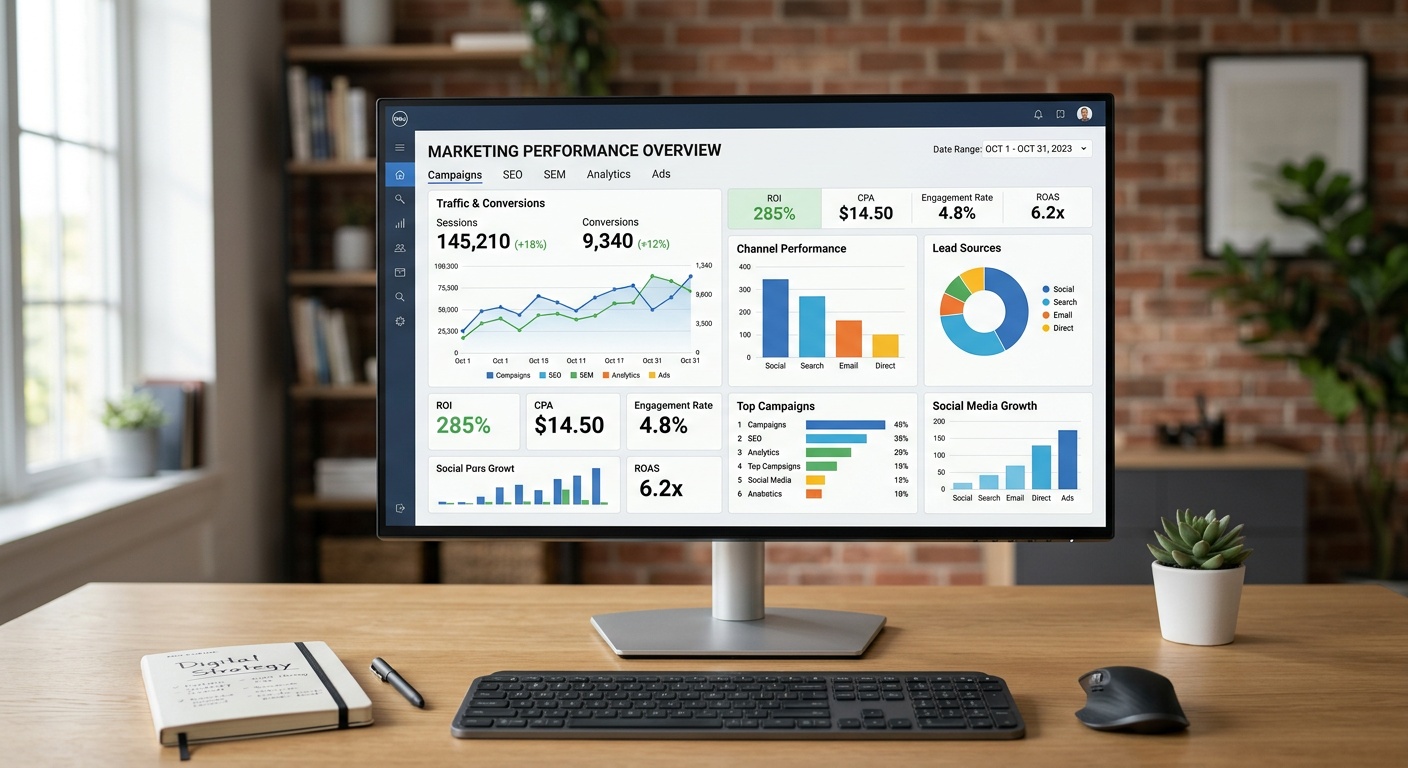
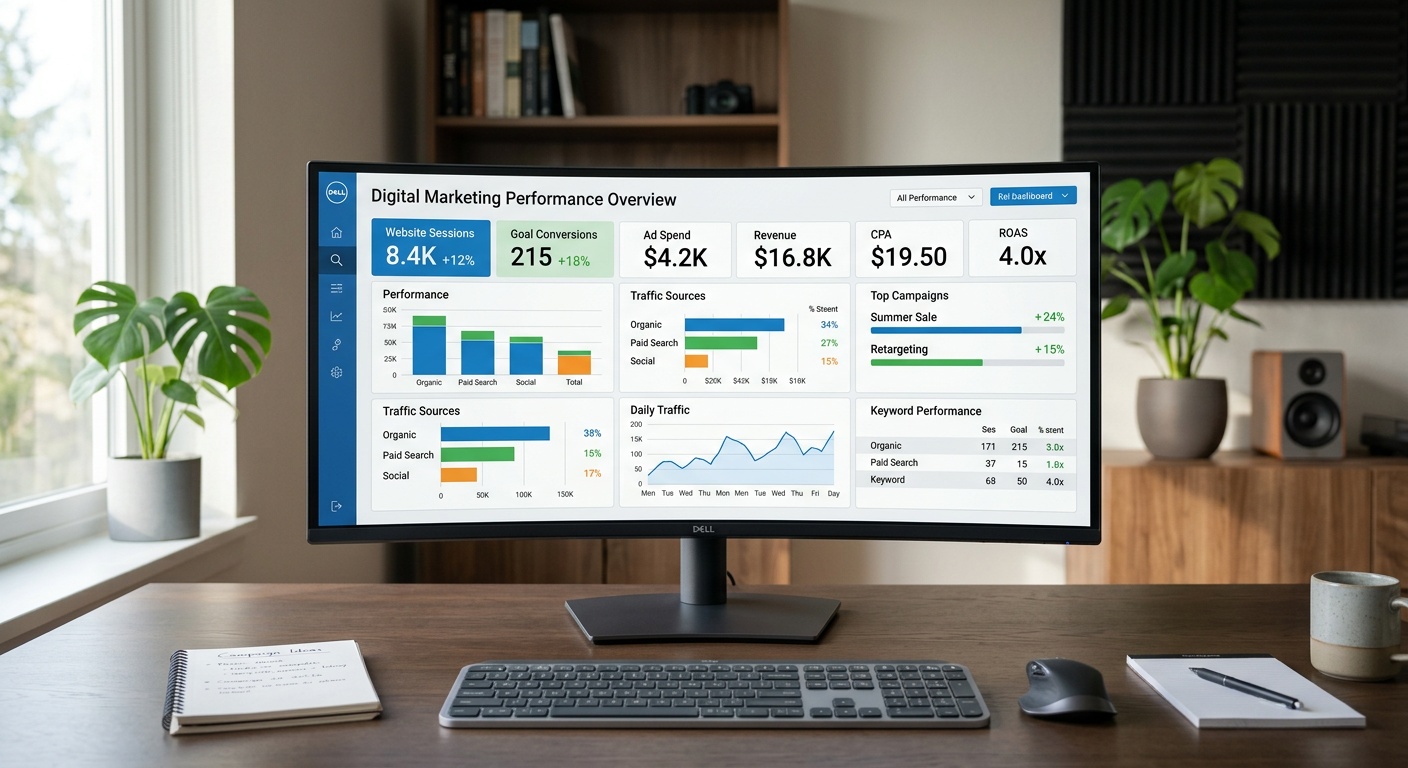
- Analytics and Reporting: Unified dashboards that give you real visibility into what’s working, what’s not, and where the next opportunity lies.
Proactive Strategy Evolution
Perhaps the most underrated value a full-service partner delivers is proactive evolution. Markets shift. Algorithms update. Competitors pivot. A good partner identifies these changes before they impact your results and adjusts strategy accordingly — without you having to notice, diagnose, and communicate the problem yourself.
This is the difference between a vendor who executes instructions and a partner who actively protects and grows your business.
Real-World Wins: Case Studies That Prove the Point
Case Study 1: The Local HVAC Company That Tripled Its Leads
A family-owned HVAC business in the southeastern United States had been running Google Ads independently for two years with modest results — roughly 30 leads per month at a cost of $180 per lead. In early 2025, they partnered with a full-service digital marketing agency that overhauled their entire digital presence simultaneously.
The agency integrated local SEO, Google Ads, a rebuilt website with optimized landing pages, and a reputation management strategy to boost their Google Business Profile reviews. Within eight months, the business was generating 94 leads per month at $67 per lead — a 213% increase in volume with a 63% reduction in cost per lead. The key wasn’t any single tactic. It was the way SEO fed credibility to the ads, and the improved website converted traffic that previously bounced.
Case Study 2: The E-Commerce Brand That Survived Algorithm Changes
A small sustainable skincare brand selling primarily through its own Shopify store had built most of its growth on organic Instagram reach through 2023 and 2024. When Meta’s algorithm updates in late 2024 dramatically reduced organic reach for product-focused accounts, their monthly website traffic dropped 38% overnight.
Because they had moved to a full-service partner in mid-2024, the response was immediate and coordinated. The agency pivoted budget toward Google Shopping campaigns, accelerated an email list growth strategy that had been in development, and rebuilt their content approach around SEO-optimized product education. By Q2 2026, they had not only recovered their pre-decline revenue but were running 47% above their previous peak — with a diversified traffic base that made them far less vulnerable to any single platform’s whims.
Full-Service vs. DIY vs. Freelancers: A Practical Comparison
Before committing to any approach, it helps to see the trade-offs clearly. Here’s an honest assessment:
| Factor | DIY Approach | Freelancers | Full-Service Partner |
|---|---|---|---|
| Cost | Low upfront, high hidden costs | Moderate, variable | Higher retainer, better ROI |
| Strategic Cohesion | Low — siloed efforts | Medium — depends on coordination | High — unified strategy |
| Speed to Results | Slow — steep learning curve | Medium — onboarding delays | Faster — integrated execution |
| Adaptability | Very low | Low to medium | High — proactive pivots |
| Scalability | Limited by owner capacity | Requires more hires | Built-in scalable resources |
The table above isn’t meant to suggest full-service partnerships are right for every business at every stage. If you’re pre-revenue or in very early testing mode, starting with targeted freelancers makes sense. But once you’re generating consistent revenue and ready to grow, the fragmented approach becomes your ceiling — not your launchpad.
The Data Behind the Decision
Average Monthly Lead Volume by Marketing Approach (2026)
Source: Illustrative composite based on 2025–2026 SMB marketing performance benchmarks.
How to Choose the Right Partner (Without Getting Burned)
Not all full-service agencies are created equal — and signing the wrong contract can set your business back by months and thousands of dollars. Here’s a practical roadmap for evaluating and selecting the right partner.
What to Look For
1. Proven SMB Experience, Not Just Enterprise Credentials
Many agencies have impressive Fortune 500 logos in their portfolio but have never had to stretch a $5,000 monthly marketing budget across five channels. Ask specifically for case studies from businesses similar in size and industry to yours.
2. Transparent Reporting and Ownership
In 2026, there is no excuse for opaque reporting. A legitimate partner gives you full access to analytics dashboards, owns nothing on your behalf (your ad accounts, your website, your CRM data are yours), and communicates results in plain language — not vanity metrics dressed up to look impressive.
3. AI Augmentation, Not AI Replacement
The best agencies in 2026 use AI tools to accelerate research, automate reporting, and optimize ad bids — but human strategists remain accountable for the work. Be cautious of agencies where AI-generated content is delivered without strategic editorial oversight or brand alignment.
4. Cultural Fit and Communication Style
This is underrated and critically important. Your marketing partner will know your business intimately. If their communication style doesn’t align with how you operate — whether you need weekly calls or prefer async updates — the relationship will degrade regardless of their technical competence.
Red Flags to Avoid
- Guaranteed first-page Google rankings (no one can guarantee this)
- Long-term lock-in contracts with no performance benchmarks
- Refusing to provide references or connect you with current clients
- Strategy decks that sound impressive but offer no specificity about your business
- Agencies that own your ad accounts, domain, or content on your behalf
Pro Tip: Ask any prospective agency what they would do differently in your marketing in the first 90 days — and why. If they can’t give you a specific, informed answer before you’ve even signed, that tells you everything about how they’ll perform after.
Frequently Asked Questions
How much should a small business budget for a full-service digital marketing partner in 2026?
Budgets vary significantly by industry, market, and growth goals. In 2026, most legitimate full-service agencies serving small businesses operate on monthly retainers between $2,500 and $8,000, excluding ad spend. Ad spend is typically managed separately and scaled based on performance data. A good rule of thumb: allocate between 7% and 12% of your gross revenue to total marketing investment, with the agency retainer representing a portion of that. Businesses in competitive local service categories or e-commerce often need to be closer to the higher end to remain competitive.
How long does it take to see results from a full-service digital marketing partnership?
This depends heavily on which channels are being activated and your starting baseline. Paid media campaigns can show measurable results within 4 to 8 weeks once campaigns are properly built and optimized. SEO and content marketing typically require 3 to 6 months to show meaningful organic traction, though improvements to existing content can accelerate this. A well-integrated strategy tends to produce compounding results — early wins from paid channels fund growth while organic channels build toward sustainable traffic that reduces paid dependency over time. Be very cautious of any partner promising dramatic results faster than this — those timelines are usually built on misleading metrics.
Can a full-service partner help if I’m in a niche or highly regulated industry?
Absolutely — and in many ways, niche and regulated industries benefit the most from a full-service approach. Industries like healthcare, legal services, financial planning, and specialized trades face strict restrictions on advertising claims and content, require precise audience targeting, and depend heavily on trust signals like reviews and authoritative content. A full-service partner with experience in your sector will understand the compliance boundaries, know which platforms allow your category of advertising, and build a content strategy that positions your brand as a genuine authority within those constraints. Always ask specifically about their experience in your regulatory environment before signing.
Your Growth Roadmap: Making the Move
You’ve seen the landscape. You understand the cost of fragmentation. You know what a real full-service partnership looks like and how to evaluate one. Now the question is: what do you do next?
Here’s a clear, action-oriented path forward:
- Audit your current marketing state. Before any conversation with a potential partner, document what you’re currently doing, what it costs (including your own time), and what results you’re actually seeing. This baseline will clarify the gap — and make you a far better client.
- Define your growth objectives for the next 12 months. Are you trying to expand into a new geographic market? Launch a new product line? Double your lead volume? Your marketing strategy should be built around specific, measurable goals — not generic “more visibility.”
- Research and shortlist 3 to 5 agencies with documented experience in your industry and business size. Request case studies, ask for references, and pay attention to how they communicate even before you’ve committed.
- Request a strategy session, not just a sales pitch. The best agencies will want to learn about your business before proposing anything. If a prospective partner comes in with a finished proposal in the first conversation, it’s a template — not a strategy.
- Start with a defined pilot engagement. Rather than signing a 12-month retainer immediately, negotiate a 90-day performance-based onboarding period with clear KPIs. This protects you and motivates the right kind of partner.
The broader trend is unmistakable: in 2026 and beyond, the gap between businesses with integrated, professionally managed digital marketing and those without will continue to widen. AI has lowered the cost of content creation, which means strategy, integration, and genuine expertise are now the differentiating factors — not just execution volume.
Here’s the question worth sitting with: If your biggest competitor signed with a full-service digital marketing partner tomorrow and you didn’t, how long before you felt it? The answer to that question is your real timeline for making a decision.
You don’t have to figure this all out alone. The right partner won’t just run your campaigns — they’ll become the strategic engine behind your growth. Find them, vet them thoroughly, and invest in that relationship like the business-critical partnership it truly is.