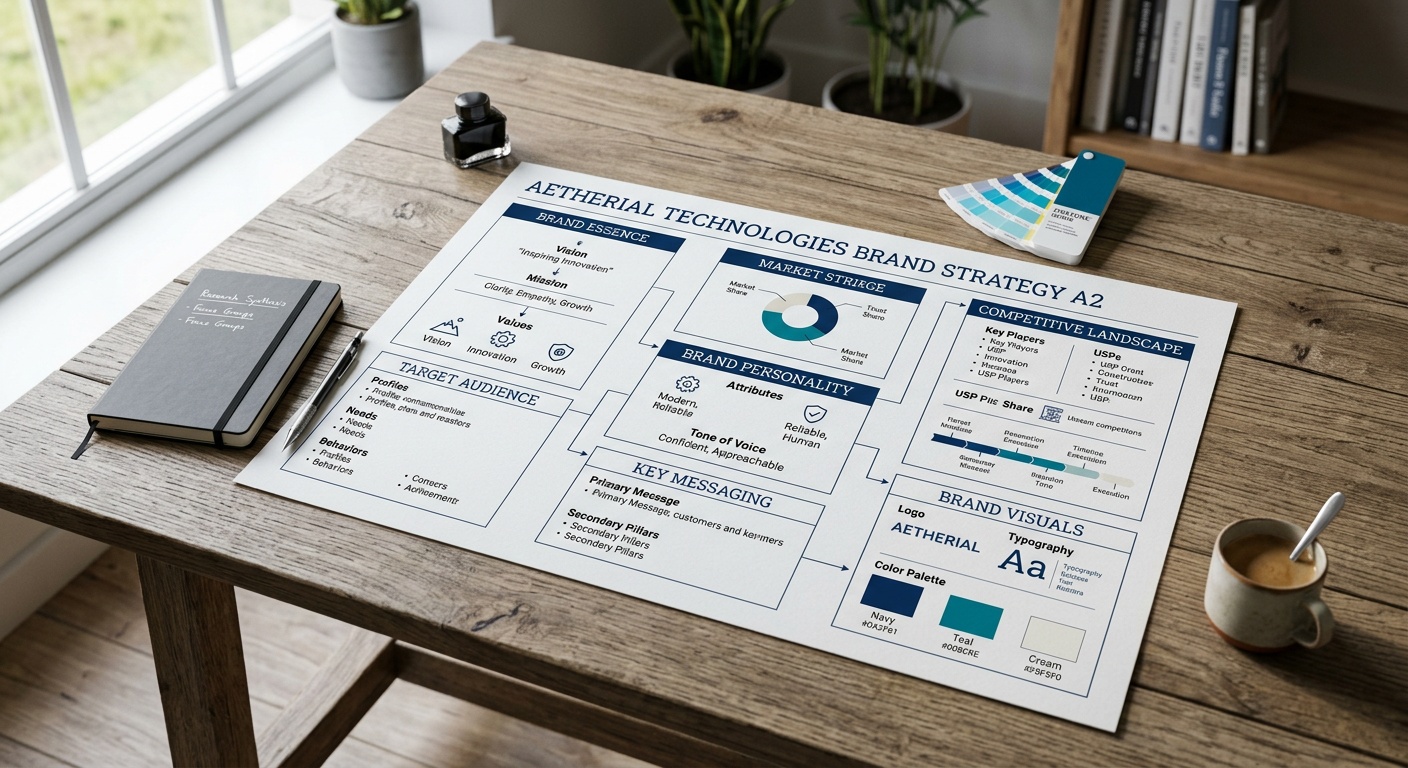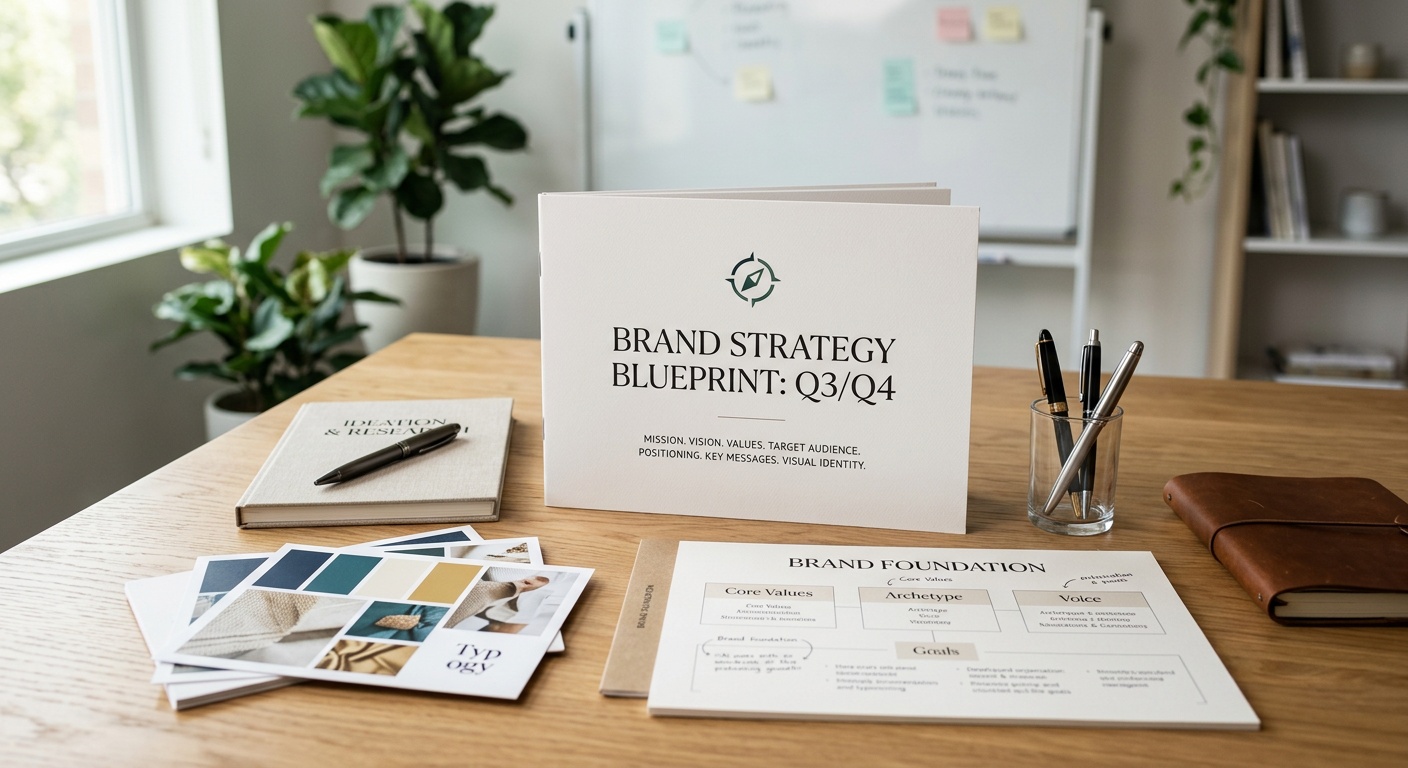
Brand Strategy Secrets That Top Digital Marketing Agencies Use
Reading time: 14 minutes
Ever wonder why some brands seem to effortlessly dominate their market while others—equally talented, equally funded—fade into the background noise? It’s rarely luck. It’s strategy. And more specifically, it’s the kind of brand strategy that top digital marketing agencies have quietly perfected over years of iteration, data, and sometimes painful failure.
Well, here’s the straight talk: building a brand in 2026 is both harder and more exciting than it’s ever been. AI-driven personalization, fragmented attention spans, the rise of micro-communities—the landscape has shifted dramatically. Yet the agencies that consistently deliver results aren’t chasing every shiny new tool. They’re applying timeless strategic principles through modern lenses.
This article pulls back the curtain on exactly how elite agencies think, plan, and execute brand strategy—so you can apply the same frameworks, whether you’re a solo founder, an in-house marketer, or a growing agency looking to sharpen your edge.
Table of Contents
- Why Most Brand Strategies Fail Before They Start
- The Positioning Foundation: Owning a Mental Real Estate
- Audience Architecture: Beyond Basic Personas
- Content as Brand Signal, Not Just Traffic Driver
- The Tension Between Consistency and Adaptability
- Measuring Brand Equity in a Data-Driven World
- Real-World Case Studies: Agencies in Action
- Frequently Asked Questions
- Your Brand Strategy Activation Plan
Why Most Brand Strategies Fail Before They Start
Here’s a scenario most marketers will recognize: a company invests weeks developing a brand strategy document. It’s beautiful—full of mission statements, brand voice guides, and color palettes. Then it sits in a Google Drive folder, largely unread, while the team continues posting inconsistently and chasing short-term sales metrics.
According to a 2025 Brand Consistency Report by Marq, 71% of companies lack consistent brand presentation across all channels, costing them an estimated 23% in potential revenue annually. That’s not a creative problem—it’s a strategic execution problem.
Top agencies identify three root causes of brand strategy failure early in their client discovery process:
- Strategy divorced from operations: The brand document doesn’t connect to day-to-day marketing decisions.
- Positioning that’s too broad: Trying to mean everything to everyone ultimately means nothing to anyone.
- Lack of internal brand ownership: No single team or person is accountable for brand coherence.
The fix? Agencies build what many call a “living brand system”—a dynamic framework that integrates strategy with execution at every touchpoint, not just at launch.
The “Strategy-Execution Gap” and How to Close It
The most effective agencies close the strategy-execution gap by translating high-level brand positioning into operational brand rules—specific, actionable guidelines that govern everything from how customer service reps speak on chat to how CTAs are worded in email campaigns.
Think of it less like a brand bible and more like a brand operating system. It runs in the background of every creative decision, quietly enforcing coherence without stifling creativity.
Pro Tip: Before building any new brand asset, ask: “Does this reinforce the one thing we want to be known for?” If the answer isn’t an immediate yes, revisit the asset—not the strategy.
The Positioning Foundation: Owning Mental Real Estate
Al Ries and Jack Trout said it in 1981, and it remains devastatingly true in 2026: positioning is the battle for your prospect’s mind. Top agencies don’t just accept this—they obsess over it.
The most powerful brand positions share a common structure. They identify:
- The specific audience segment they’re serving (not everyone)
- The specific problem they solve better than anyone else
- The specific reason they’re credible in that claim
In practice, this looks like: “We help Series A SaaS founders reduce churn in their first 18 months through retention-focused product marketing.” Compare that to: “We’re a full-service digital marketing agency for tech companies.” One of these wins business; the other loses it to noise.
The Positioning Ladder: Moving Up or Down Strategically
Elite agencies understand that positioning exists on a spectrum—from highly specific (niche) to broadly aspirational (category leader). Where you sit on that ladder should be a deliberate choice based on your growth stage, not an accident.
Early-stage brands almost always benefit from going narrower. A 2025 study by the Content Marketing Institute found that niche-positioned brands see 3.2x higher engagement rates and 41% lower customer acquisition costs compared to broadly positioned competitors in the same industry vertical.
As trust and recognition build, agencies help brands strategically expand their positioning territory—but only from a position of earned authority, never desperation.
Audience Architecture: Beyond Basic Personas
Most marketers have heard of buyer personas. Most marketing agencies still use them. But the top-tier agencies have evolved significantly past the “Meet Jennifer, 34, who drinks lattes and reads Forbes” approach.
In 2026, advanced agencies practice what’s called Audience Architecture—a layered, dynamic approach to understanding your ideal customer that combines behavioral data, psychographic modeling, and real-time signal tracking.
The Three Layers of Audience Architecture
Rather than building a single persona, leading agencies construct audiences in three distinct layers:
- Layer 1 — Demographic Foundation: The basic who (age, role, industry, geography). Necessary but not sufficient.
- Layer 2 — Behavioral Signals: How they consume content, what platforms they inhabit, what triggers their purchasing decisions. This is where most agencies stop—but not the best ones.
- Layer 3 — Psychographic Depth: What they fear, what they aspire to, what makes them feel smart or validated. This layer drives the emotional resonance that makes brand messaging truly land.
The psychographic layer is particularly critical in 2026, where attention is scarce and consumers are more sophisticated than ever at detecting inauthenticity. According to Edelman’s 2025 Trust Barometer, 67% of consumers say they choose brands based on shared values—not just product features or price.
Quick Scenario: Imagine you’re marketing a B2B project management software. Surface-level, you’re targeting “operations managers at mid-size companies.” But Layer 3 reveals something more powerful: your ideal customer is someone who feels chronically underappreciated by leadership and desperately wants to be seen as the person who brought order to chaos. Now your messaging doesn’t just sell software—it sells professional redemption. That’s the difference between good marketing and great marketing.
Content as Brand Signal, Not Just Traffic Driver
One of the most significant mindset shifts top agencies have made in recent years is reframing the purpose of content. Agencies focused purely on SEO traffic treat content as a funnel mechanism. Agencies focused on brand building treat every piece of content as a brand signal—a proof point of what you stand for, how you think, and why you can be trusted.
These two approaches aren’t mutually exclusive, but they produce very different content when applied as primary lenses. Consider this comparison:
| Dimension | Traffic-First Content | Brand-First Content |
|---|---|---|
| Primary Goal | Rank for keywords, drive clicks | Establish authority, build trust |
| Success Metric | Organic sessions, impressions | Brand recall, share of voice |
| Tone | Neutral, informational | Distinctive, opinionated |
| Lifespan | Tied to algorithm cycles | Compounds over time |
| Differentiation | Low (easily replicated) | High (rooted in unique POV) |
The smartest agencies blend both approaches—using SEO discipline to ensure discoverability while infusing brand perspective into every piece to ensure memorability. A blog post that ranks #1 but sounds exactly like every competitor’s content is a missed brand opportunity.
In 2026, with AI-generated content flooding every search category, having a distinctive brand voice in content isn’t optional—it’s a survival mechanism. HubSpot’s 2025 State of Marketing Report noted that 58% of marketers cite “brand differentiation” as their top content challenge, up from 39% in 2023.
The Tension Between Consistency and Adaptability
Here’s a paradox every brand strategist wrestles with: brands need to be consistent enough to build recognition, yet adaptable enough to stay relevant in rapidly changing environments. Get the balance wrong in either direction, and you either become a boring fossil or an identity-less shape-shifter.
Top agencies resolve this tension through a concept often called the “Brand Core vs. Brand Expression” framework:
- Brand Core (Never changes): Your purpose, your values, your positioning promise, your voice fundamentals. These are non-negotiable and change only with massive deliberate effort.
- Brand Expression (Evolves constantly): Visual trends, platform-specific tone, campaign aesthetics, topical relevance. These flex to stay culturally current without abandoning the core.
Think of how Apple has navigated this for decades. The core—simplicity, human-centered design, premium quality—has never wavered. But the brand’s visual language, campaign aesthetics, and messaging tone have evolved significantly across eras. That’s not inconsistency; that’s strategic adaptability anchored to a fixed core.
In 2026, this framework is especially critical as brands must show up coherently across AI search results, short-form video, conversational interfaces, and traditional web—each of which demands different expressive formats while requiring the same underlying brand identity.
Measuring Brand Equity in a Data-Driven World
One of the most common frustrations brand teams face is justifying brand investment to leadership that wants to see direct ROI. This is where many agencies struggle—and where the best ones shine.
Top agencies don’t avoid brand measurement; they define it differently. Instead of trying to attribute every brand touchpoint to a conversion (which is both impossible and conceptually flawed), they build a Brand Health Dashboard that tracks leading indicators of long-term commercial value.
Key Brand Health Metrics Used by Elite Agencies
Here’s a look at the brand equity metrics that consistently appear in top agencies’ reporting frameworks in 2026:
Brand Equity Metrics: Average Impact on Revenue Growth (Agency Client Data, 2025)
Note: Percentages represent correlation strength between metric improvement and subsequent 12-month revenue growth, based on aggregated agency reporting data.
Particularly telling is the rise of direct traffic growth as a brand metric. When people type your URL directly or search your brand name specifically, it signals genuine brand pull—people seeking you out rather than stumbling across you. This is one of the clearest indicators of brand equity in action, and it’s increasingly used in agency reporting as a proxy for brand-building effectiveness.
Real-World Case Studies: Agencies in Action
Case Study 1: Rebranding a Commoditized SaaS Product
In early 2025, a mid-size HR technology company approached a boutique digital agency with a familiar problem: they had a solid product but were losing deals to competitors with inferior features simply because those competitors had stronger brand recognition.
The agency’s diagnosis was precise: the company had positioned itself as a “comprehensive HR solution”—a description that applied equally to 47 of their direct competitors. There was no differentiated reason to choose them.
The agency’s three-phase response:
- Phase 1 — Positioning Excavation: Through customer interviews and win/loss analysis, the agency identified that the company’s true differentiator was speed of onboarding—their customers went live 60% faster than the industry average. This became the brand’s single, ownable claim.
- Phase 2 — Messaging Architecture: Every piece of marketing material was rebuilt around the “fastest path to people operations” positioning, from the homepage hero copy to sales deck titles.
- Phase 3 — Content as Proof: The agency launched a content series featuring customer stories specifically about implementation speed, creating tangible evidence for the positioning claim.
Results within 12 months: 34% increase in demo-to-close rate, 27% reduction in sales cycle length, and—critically—a 41% increase in branded search volume, indicating the positioning was gaining real market recognition.
Case Study 2: Building a Brand in a Crowded DTC Market
A direct-to-consumer wellness brand launched in Q2 2025 with minimal budget but a clear ambition: compete in the hyper-saturated supplement market. Instead of trying to compete on product claims (which are legally constrained and heavily commoditized), their agency advised a radical brand-first approach.
Rather than leading with product, the brand led with a community philosophy—positioning itself as the brand for people who were “skeptical of wellness culture” but still wanted to feel good. They leaned into contrarianism, publishing content that actively questioned the industry’s overpromising, occasionally even critiquing supplement culture broadly.
This brand positioning, while counterintuitive, created immediate magnetic differentiation. The brand built an audience of 180,000 engaged followers across platforms within nine months, with an average engagement rate of 6.8%—more than three times the industry benchmark of 2.1%. More importantly, their customer lifetime value was 2.4x higher than the category average, driven by community loyalty rather than repeat promotion.
The lesson? Authentic brand tension—standing against something as much as for something—is one of the most underused tools in brand strategy.
Frequently Asked Questions
How long does it take to see results from a brand strategy investment?
Brand strategy operates on a different timeline than performance marketing. Realistically, foundational brand work—positioning, messaging, visual identity—takes 3-6 months to develop and deploy properly. The measurable impact on metrics like branded search volume, share of voice, and unaided recall typically begins to show meaningfully between 6-18 months, depending on investment level, competitive intensity, and execution consistency. Agencies that promise brand results in 30-60 days are typically talking about tactical brand refresh work, not deep strategic repositioning. The key is to set clear leading indicators (content engagement, brand sentiment, direct traffic) that you track monthly while acknowledging that the full commercial payoff compounds over years, not weeks.
Should a small business invest in professional brand strategy, or can they do it themselves?
The honest answer is: it depends on your positioning complexity and competitive environment. For very early-stage businesses testing product-market fit, a lightweight DIY brand foundation is often sufficient—focus on clear positioning language and a consistent visual identity, and refine as you learn. However, once you’re competing in a crowded market, struggling to differentiate, or preparing to scale marketing spend significantly, professional brand strategy typically pays for itself multiple times over. The risk of DIY brand strategy isn’t effort or cost—it’s blind spots. It’s nearly impossible to see your own brand with fresh eyes. A skilled external strategist will identify differentiation opportunities and positioning gaps that internal teams systematically miss because they’re too close to the product.
What’s the biggest mistake companies make when working with a digital marketing agency on brand strategy?
Treating brand strategy as a one-time deliverable rather than an ongoing practice. Many companies engage an agency, receive a brand strategy document, and consider the job done. In reality, brand strategy is a living system that requires continuous reinforcement, measurement, and occasional recalibration. The companies that extract the most value from agency partnerships in 2026 are those that integrate brand strategy into their quarterly planning cycles, involve their agency partners in go-to-market decisions (not just creative executions), and maintain clear internal ownership of brand health metrics between agency engagements. Brand is too important to be treated as a project—it needs to be treated as a function.
Your Brand Strategy Activation Plan
You’ve just consumed a significant amount of strategic intelligence. Now let’s make it actionable. Here’s your five-step activation roadmap, drawn directly from the frameworks elite agencies use with new clients:
- Audit your current positioning (Week 1-2): Google your top 5 competitors and read their homepage hero copy. Now read yours. If they’re interchangeable, you have a positioning problem. Document the gaps with brutal honesty.
- Conduct 5-7 customer psychographic interviews (Week 2-4): Don’t ask what they like about your product. Ask what they were afraid of before choosing you, what made them feel validated after, and what they tell friends about you. Layer 3 audience insight lives in these answers.
- Write your single positioning statement (Week 4-5): Using the three-part framework from this article (audience + problem + credibility), draft a positioning statement specific enough that it excludes most of your competitors by definition. Narrow is powerful.
- Build your Brand Health Dashboard (Week 5-6): Select 3-4 brand health metrics from the framework above—at minimum, track branded search volume, NPS, and direct traffic. Establish baselines. Measure monthly.
- Align content to brand signal (Ongoing): For the next 90 days, before publishing any piece of content, ask: “Does this reinforce our positioning promise?” Make this a team ritual, not a solo check.
Here’s the broader context worth carrying with you: in 2026 and beyond, as AI increasingly handles performance marketing optimization, brand becomes the ultimate sustainable competitive advantage—the one thing algorithms can’t replicate or commoditize. The companies investing in brand strategy today are building moats that will compound dramatically over the next decade.
So here’s the question that should sit with you: If a stranger encountered your brand for the first time today—your website, your social presence, your content—would they know in 10 seconds what makes you uniquely worth paying attention to? If the honest answer is no, you now have both the frameworks and the roadmap to change that. The only remaining variable is your commitment to doing the work.